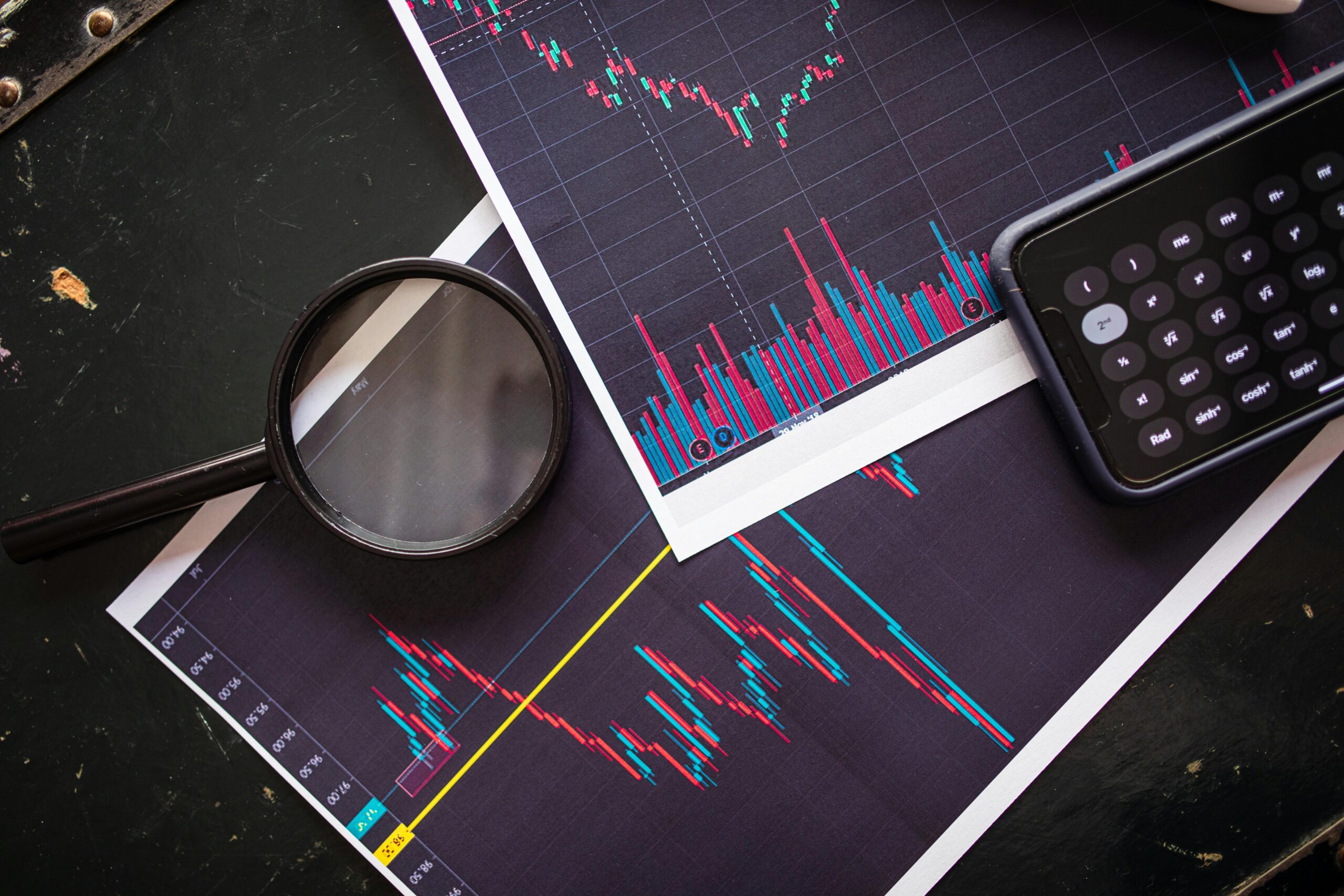
Modern financial platforms are fast, precise, and efficient. They process millions of data points per second, execute trades in milliseconds, and provide real-time global access to markets.
Human cognition is none of those things.
It is slow, emotional, pattern-seeking, and limited.
This fundamental mismatch — between machine speed and human psychology — is one of the primary sources of stress, error, and financial loss in digital markets.
Technology has not removed human weakness from finance.
It has amplified it.
The Speed–Emotion Gap
Human decision-making evolved in environments where change was slow and information was scarce. Today, markets move continuously, globally, and instantly.
This creates what psychologists call cognitive overload — the brain is exposed to more information than it can process effectively.
As information volume and speed increase:
- Attention fragments
- Emotional arousal increases
- Impulse control weakens
- Decision quality declines
Research in cognitive science shows that under time pressure and information overload, humans revert from analytical reasoning to emotional and heuristic-based decision-making.
In other words, the faster the system becomes, the less rational the human inside it behaves.
Why More Tools Do Not Mean Better Decisions
Many market participants believe that more indicators, more data, and more software will improve outcomes.
In practice, the opposite often happens.
More tools:
- Increase cognitive noise
- Create conflicting signals
- Encourage overreaction
- Foster illusion of precision
This phenomenon is known as analysis paralysis or information overload bias.
Beyond a certain point, additional data reduces clarity rather than improving it.
Why Algorithms Cannot Replace Self-Control
Algorithms can:
- Execute trades
- Detect statistical patterns
- Optimise for predefined objectives
They cannot:
- Define meaningful objectives
- Set ethical or risk boundaries
- Prevent emotional overrides
- Decide when not to act
The algorithm executes.
The human decides.
And most failures occur not at the level of execution, but at the level of decision framing.
A perfect tool in the hands of an unregulated mind is a dangerous instrument.
Emotion Is Not Removed — It Is Relocated
Technology does not remove emotion from markets. It shifts where emotion is expressed.
Instead of shouting on trading floors, emotion now expresses itself through:
- Rapid clicking
- Overtrading
- Obsessive monitoring
- Compulsive position adjustments
- Constant platform checking
The emotional intensity is not gone. It is simply digitised.
The Human Mind as the System Bottleneck
Every financial system ultimately depends on human inputs:
- What to trade
- How much to risk
- When to enter or exit
- How to respond to loss
- Whether to follow or break rules
This makes the human mind the most fragile and most powerful component of the system.
The limiting factor is not computational power.
It is emotional regulation.
Why Self-Mastery Outperforms Software
Self-mastery refers to:
- Awareness of emotional states
- Ability to delay impulsive action
- Capacity to tolerate uncertainty
- Willingness to accept losses
- Discipline to follow pre-set rules
These qualities cannot be automated.
They must be cultivated.
Technology amplifies whatever psychology you bring into it.
A disciplined mind becomes more powerful.
An undisciplined mind becomes more dangerous.